
Almost every conversation about buying a detector ends up at the same fork: VLF or pulse induction? The spec sheet won't tell you which one you need — that depends on what you're searching for and what kind of ground you're standing on. Here's what each technology is actually doing, so the choice stops being a guess.
How VLF Detectors Work
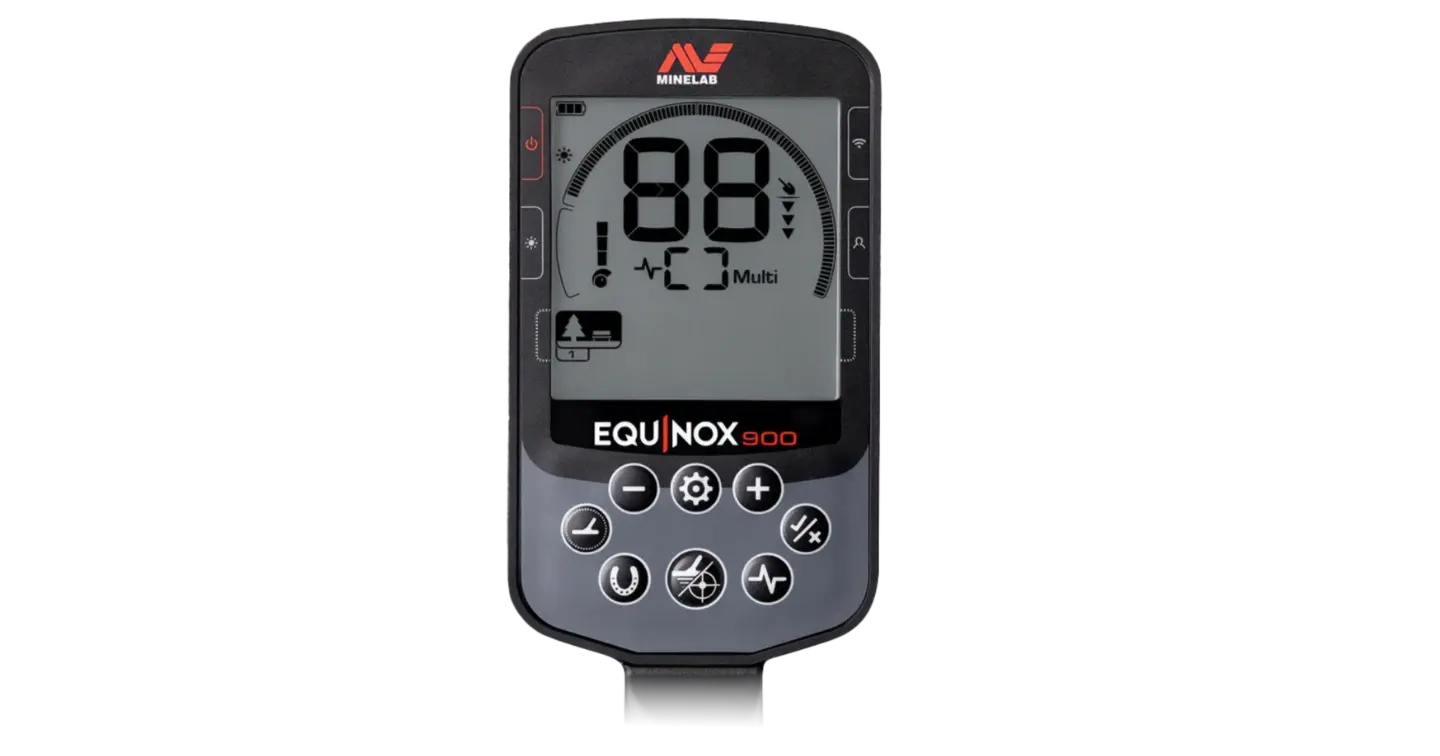
VLF stands for Very Low Frequency, and it describes detectors that use two coils — one transmitting a continuous signal, one receiving it. When a metal object passes underneath, it distorts the returning signal in a way that depends on the object's conductivity. That distortion is a phase shift, and it's what lets a VLF detector tell the difference between a coin and a bottle cap before you dig either one. This is called discrimination, and it's the main reason VLF machines dominate coin, relic, and jewelry hunting — most of the models in our metal detector range, from the Nokta FindX up through the Minelab Equinox series, are VLF or multi-frequency VLF designs.
How Pulse Induction Detectors Work
Pulse induction, or PI, works differently. Instead of a continuous signal, a PI detector sends short, powerful pulses into the ground and measures how long it takes the reflected signal to decay. Metal objects extend that decay time; the detector reads the delay rather than a phase shift. Because that decay-time reading is far less sensitive to iron-rich or salty soil than a VLF phase shift is, PI detectors push through heavily mineralized ground — black sand, laterite, volcanic soil — that would drown a VLF machine in false signals. The tradeoff is that most PI detectors can't discriminate targets well, so you dig most things that beep. Minelab's GPX and SDC lines are PI detectors built specifically around this strength.
Which One Do You Actually Need
- Coin, relic, and jewelry hunting in parks, fields, and beaches with normal-to-moderate soil — VLF, for the discrimination and lighter weight.
- Gold nugget prospecting in mineralized ground, old goldfields, or red dirt and black sand — pulse induction, for depth and stability where VLF machines struggle.
- Searching trashy or iron-heavy sites where you need to skip junk — VLF with strong discrimination and iron audio, not PI.
- Maximum depth on a low-trash site where you're willing to dig everything — PI, if your back can take it.
What About Multi-Frequency
The newer middle ground is multi-frequency VLF — Minelab's Multi-IQ and Equinox/Manticore lines are the clearest example, running several frequencies simultaneously and blending the results. That narrows the gap with PI in mineralized ground while keeping full discrimination. It costs more than a single-frequency VLF machine, but for someone who splits their time between beaches, parks, and moderately mineralized fields, it removes the need to own two detectors.
If you're still not sure which side of this you land on, tell us on WhatsApp what you're searching for and roughly where — we'll narrow it to two or three models rather than making you read every spec sheet in the catalog.

