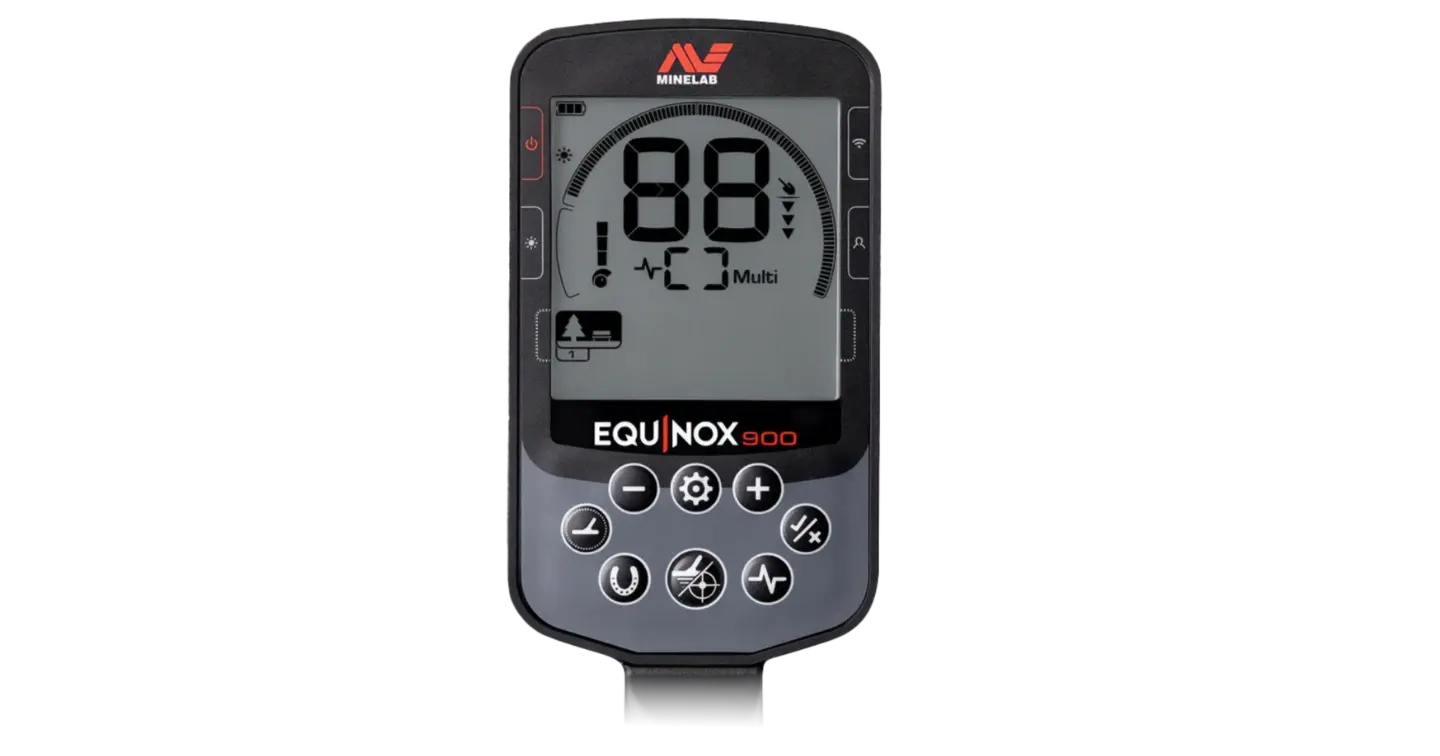

Balochistan's ground is not one thing. Within a few hours' drive you can move from salty alkaline flats to iron-rich red soil to loose river-wash gravel, and a detector that ran quiet and deep in one of those will chatter and lose depth in another. That's mineralization at work, and understanding it changes how you set up before you ever swing a coil.
What "Mineralized Ground" Actually Means
Soil isn't electromagnetically neutral. Iron oxide, certain salts, and volcanic minerals all react to a detector's transmitted signal on their own, producing a background response that has nothing to do with a buried target. A detector reads that background as noise — inconsistent chatter, a falsely rising threshold, or phantom signals that turn out to be nothing when you dig. The more mineralized the ground, the harder the detector has to work to separate a real target from the ground itself, and the more depth you typically lose in the process.
Ground Balance, Explained
Ground balancing is how a detector cancels out that mineral response so it can focus on actual metal. Entry-level machines usually ship with a preset or a simple manual adjustment; more advanced detectors track the ground in real time as you sweep, adjusting automatically as mineralization changes underfoot — useful on a site where the soil composition shifts within the same field. If your detector has a ground balance function and you've never touched it, that's usually the single biggest performance gain available to you for free.
Matching Equipment to Terrain
- Salt-affected or coastal ground — salt is one of the harder conditions to run in; look for a detector with strong automatic ground tracking and, ideally, a stated salt/beach mode.
- Old riverbeds and alluvial ground where gold has historically washed down — this is often moderately-to-heavily mineralized; a pulse induction or multi-frequency detector with solid ground balance will outperform a basic single-frequency VLF here.
- Hard-rock or red dirt regions with high iron content — depth suffers on every detector here, but PI machines and detectors with adjustable ground balance hold up best.
- Parks, fields, and low-mineralization farmland — this is the easy case; most mid-range VLF detectors perform close to their rated depth.
None of this is guesswork you have to do alone — if you tell us roughly where you're planning to search, we can point you toward a detector (and a ground balance setting) that's already suited to it, instead of finding out the hard way three hours from the shop.